Natural Light from Above
Rooflights and roof lanterns both offer the promise of bright, open interiors filled with natural light. But which one suits your project best?
In this guide, we explore the key differences between flat rooflights and roof lanterns, including aesthetics, performance, installation, and cost. Whether you’re aiming for minimal elegance or architectural impact, this breakdown will help you make the right decision.
What Is a Flat Rooflight?
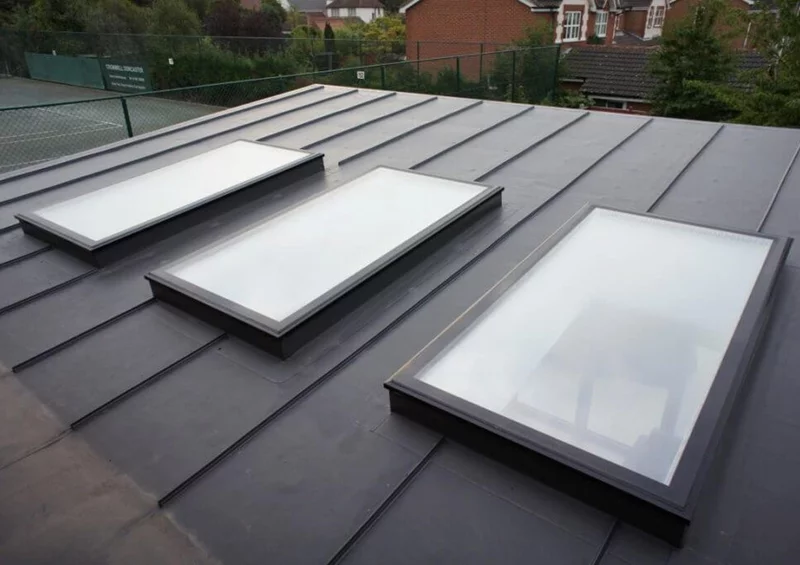
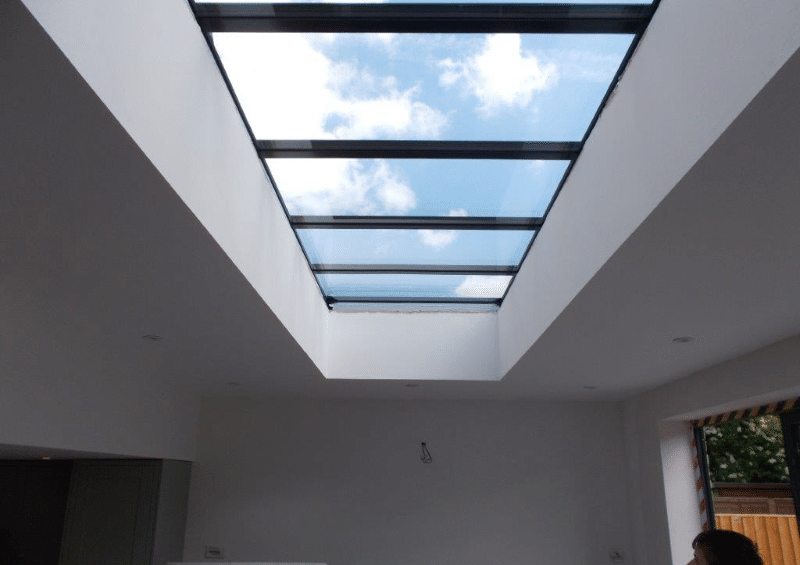
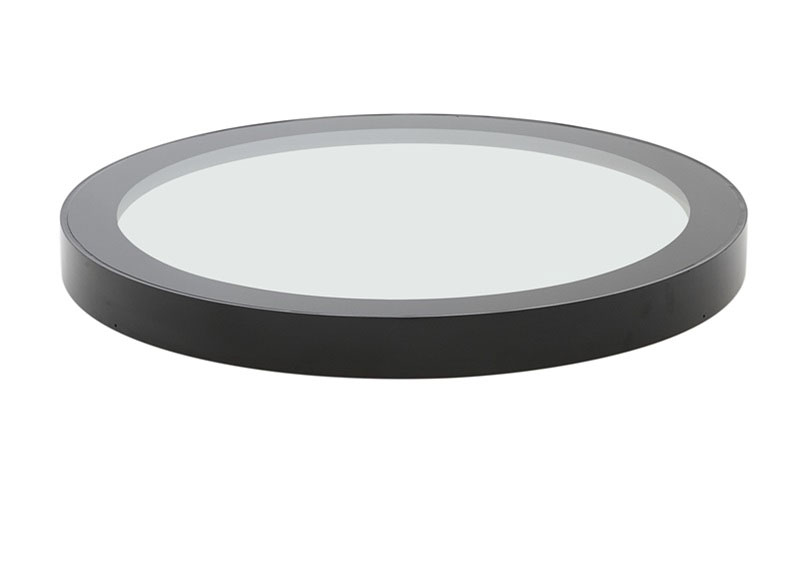
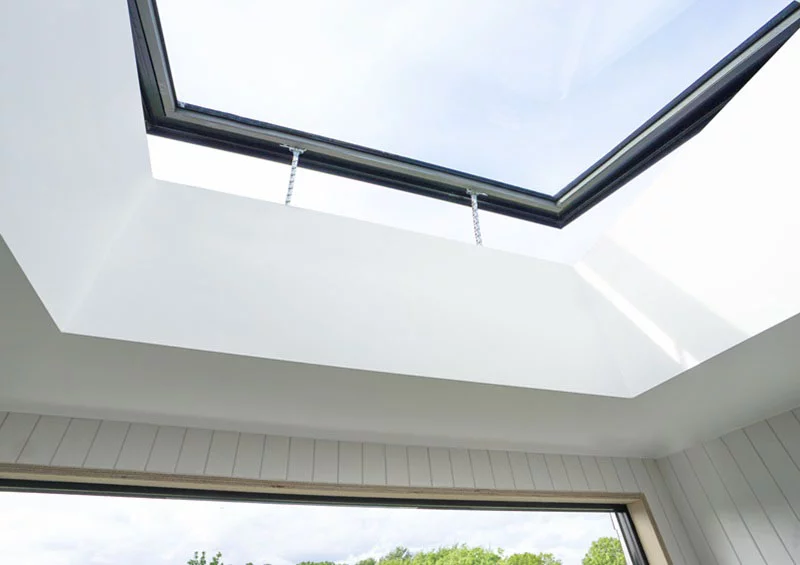
A flat rooflight is a fixed glazing unit designed to sit flush with your flat roof. Known for their clean lines and frameless appearance from the inside, they are a popular choice for contemporary homes or anywhere you want the glazing to feel understated.
At Roof Maker, our flat rooflights are triple glazed as standard, available in bespoke sizes up to 3 square metres, and can be combined in modular configurations to span even larger areas. We also offer hinged opening versions, ideal for rooms that need added ventilation.
Flat rooflights are especially suited to homeowners looking for maximum natural light with minimal visual intrusion, both inside and out. Fortunately, in many cases — provided the unit sits no more than 150 mm above the roof plane and falls below your roof’s highest point — these flush-fitting rooflights are considered permitted development and won’t require planning permission. That gives you more daylight with less paperwork. You can read more about rooflights and planning permission here.
What Is a Roof Lantern?
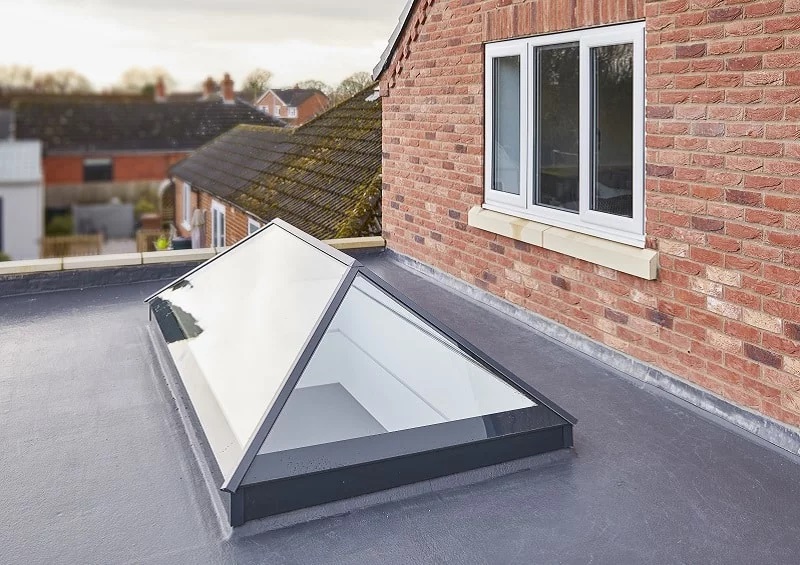
A roof lantern is a triangular glazed structure, typically shaped like a pyramid or prism, which sits above the roof level. Its angled panes capture sunlight from multiple directions, making it ideal for larger spaces where light needs to reach further into the room.
Our Slimline® Roof Lantern features the slimmest glazing bars on the market. These ultra-thin profiles are seamlessly integrated into the glass seals, creating a clean, architectural statement that complements modern design sensibilities while delivering outstanding performance. Underneath that refined exterior lies industry-leading engineering: our double and triple glazed units are manufactured in-house and are argon-filled, offering superior insulation, enhanced noise reduction, and overall energy efficiency without compromising on the minimalist appeal. For a deeper dive into the science behind our glazing technology, check out our post on innovative glazing.
Roof lanterns can also include an opening panel for ventilation, and their elevated design adds both light and a sense of height to your space.
Flat Rooflights vs Roof Lanterns: Key Comparisons
| Feature | Flat Rooflight | Roof Lantern |
|---|---|---|
| Aesthetic | Minimalist, modern, sits flush with the roof | Architectural statement, adds height and interest |
| Light Entry | Direct overhead light, excellent sky views | Multi-directional light throughout the day |
| Ventilation | Hinged and full electric access versions available | Optional opening panel, both manual and electric |
| Installation | Fully assembled; simpler to install | Flat-pack or fully built options available |
| Maintenance | Easy-clean coatings help reduce cleaning effort | Pitched design helps shed rain and debris |
Choosing the Right Glazing for Your Project
Both rooflights and roof lanterns offer their own distinct advantages. If you value subtlety, a seamless appearance, and easy installation, a flat rooflight is likely the better fit. If you’re aiming to make a visual impact, flood a large space with multi-angle light, or create a show-stopping architectural feature, a roof lantern may be the ideal choice.
At Roof Maker, all our glazing units are manufactured in-house at our Leicester facility, giving us full control over quality and design. Whether you opt for a rooflight or a lantern, you’ll benefit from choosing triple glazing as standard, bespoke options, and best-in-class performance.
Need help choosing? Our experts are happy to guide you through the options and help you find the perfect product for your space.
Updated: 28th August 2025