
There’s a particular kind of disappointment that arrives around mid-July. The bright, airy, glass-roofed extension you spent months planning - the one that floods the kitchen with light and makes the whole house feel bigger - has quietly turned into a greenhouse. By early afternoon it’s too warm to sit in, and you find yourself drawing the blinds on the very feature you paid to let the light in.
It’s one of the most common worries we hear from homeowners, and it’s a fair one. But it’s also a solvable one. Overheating isn’t an inevitable trade-off for a beautifully glazed space – it’s a design problem, and like any design problem, it can be planned out before it ever starts. Get the glazing, ventilation and shading right, and a glazed extension stays comfortable through a British summer without sacrificing any of the light that made it worth building.
Here’s how to make sure your space works as well in August as it does in November.
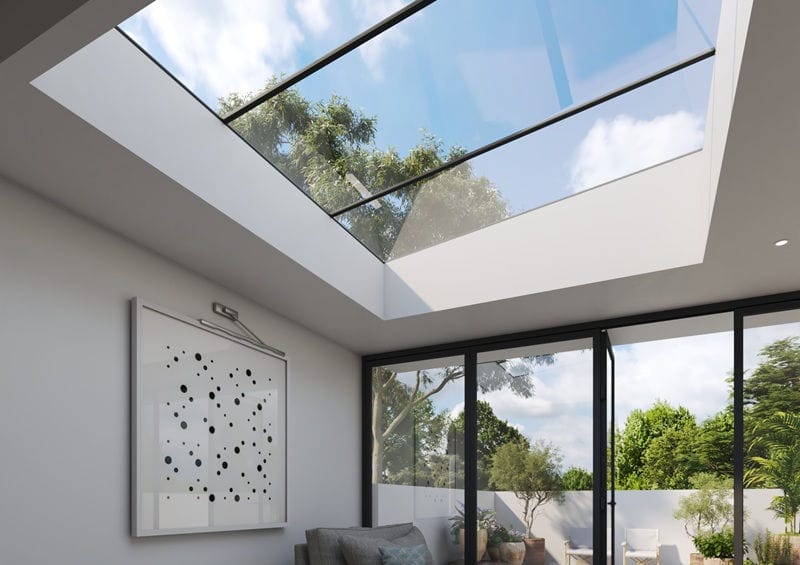
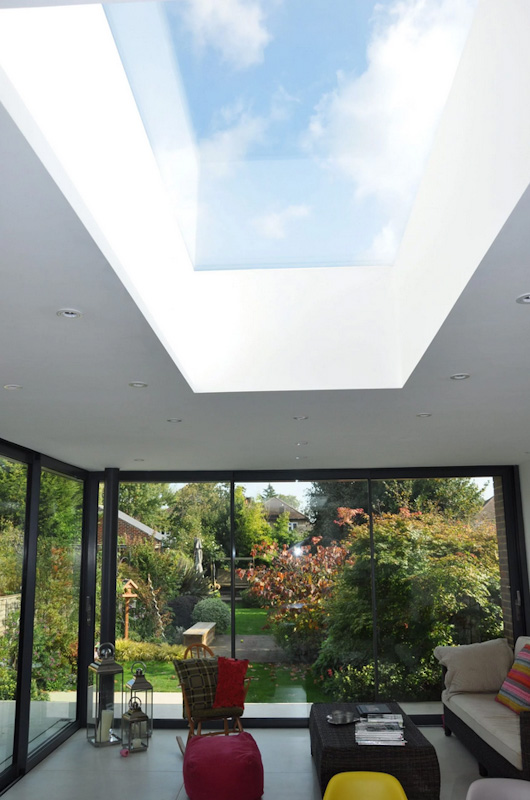
Why glazed roofs overheat in the first place
To stop overheating, it helps to understand where the heat actually comes from. The culprit is solar gain – the warmth that builds up inside when sunlight passes through glass, is absorbed by the surfaces and furnishings inside, and is re-radiated as heat that can’t easily escape back out. It’s the same effect that warms a parked car on a sunny day.
Roof glazing feels this more acutely than vertical windows, and for a simple reason: the roof takes the brunt of the sun. During the middle of the day, when the sun is high, a roof receives far more direct sunlight than any wall. So while a glazed roof is brilliant at capturing daylight – which is exactly why it transforms a room – that same exposure means heat management has to be designed in deliberately, rather than left to chance.
The good news is that the amount of heat a glazed roof lets in isn’t fixed. It depends almost entirely on choices you make before installation: the glass you specify, how the space is ventilated, what shading you add, and where the glazing is positioned in the first place. Those four levers are what the rest of this guide is about – starting with the single most important one.
Start with the glass: solar control glazing
If overheating is mostly about how much heat the glass lets through, then the glass itself is your first and most powerful line of defence. This is where the problem is won or lost, which is why it’s worth getting right before you think about anything else.
Solar control glazing is engineered to do something clever: let the daylight in while reflecting away a large portion of the sun’s heat. A microscopically thin metallic coating on the glass filters the incoming solar radiation, so you still get the bright, natural light you wanted, but without the same build-up of heat behind it. Pair that with triple glazing and you have a unit that performs hard in summer and winter – keeping heat out when it’s hot, and keeping it in when it’s cold.
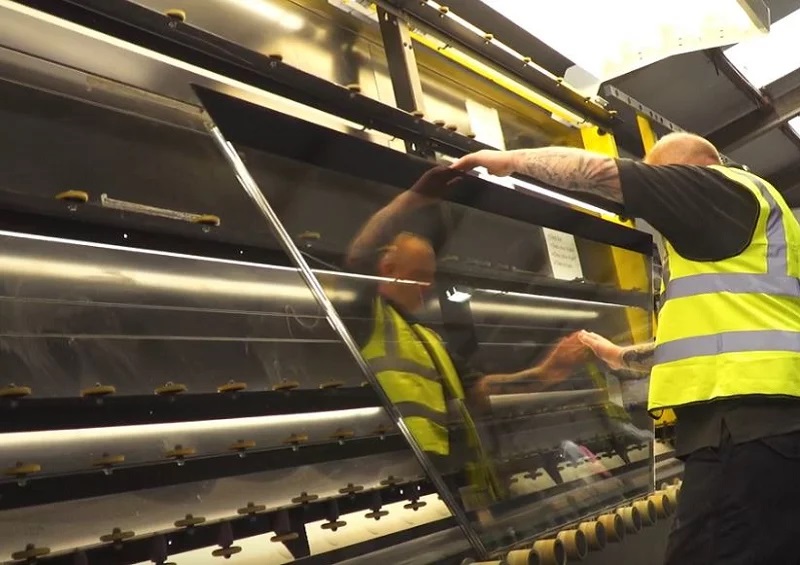
This is also where it matters who actually makes your rooflight. At Roof Maker, we manufacture all of our own glazing units in-house, rather than buying them in from a third party as many suppliers do. That gives us complete control over the materials, the coatings and the quality of every unit that leaves our factory – and it means that when we talk about thermal performance, we’re talking about glass we’ve built ourselves to a standard we set. Our Luxlite® Plus pitched rooflight, for example, is triple glazed with Ug-values as low as 0.6 W/m²K and offers a solar control glazing option specifically to manage heat gain and light levels – exactly the kind of specification that keeps a south-facing room comfortable.
It’s the difference between glazing that simply meets the standard and glazing that’s built to perform. Plenty of glazed extensions overheat simply because the glass was specified to tick a box rather than to perform, and no amount of ventilation or shading fully compensates for glass that lets too much heat in to begin with. Start with the right unit and every other measure has less work to do. You can read more about how we approach this on our innovative glazing page, or in our deeper dive into the science of glass.
Let the hot air out: ventilation
Even the best glass can’t carry the load entirely on its own. Some heat will always build up over a long, sunny day – and the most effective way to deal with it is simply to give it somewhere to go. This is where an opening rooflight earns its place.
There’s a neat piece of physics working in your favour here, often called the stack effect. Hot air rises, so it naturally collects at the highest point of a room – which, in a glazed extension, is right up at the roof. A rooflight that opens lets that pooled warm air escape exactly where it gathers, drawing cooler air in from windows and doors lower down to replace it. The result is a gentle, continuous flow that flushes heat out of the space rather than letting it sit and build. An opening positioned high in the roof does this far more effectively than a window in a wall ever could, because it’s working with the way warm air moves rather than against it.
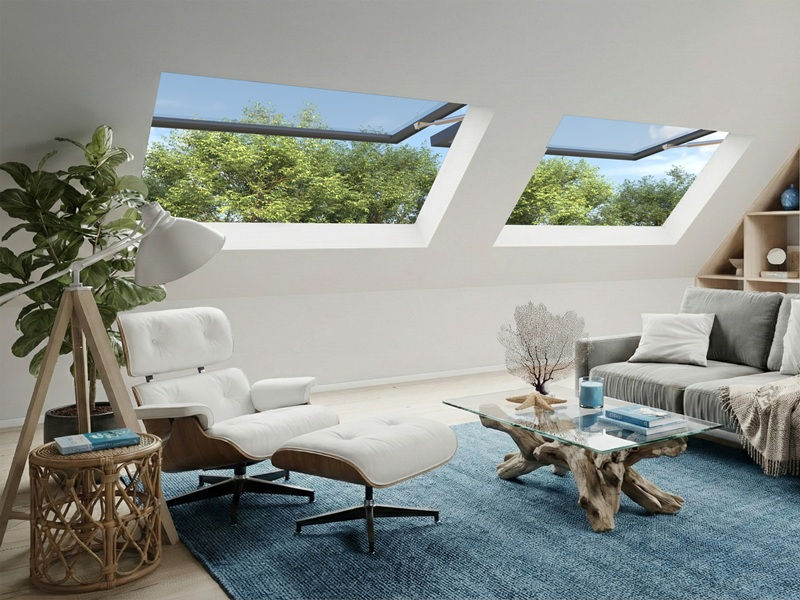
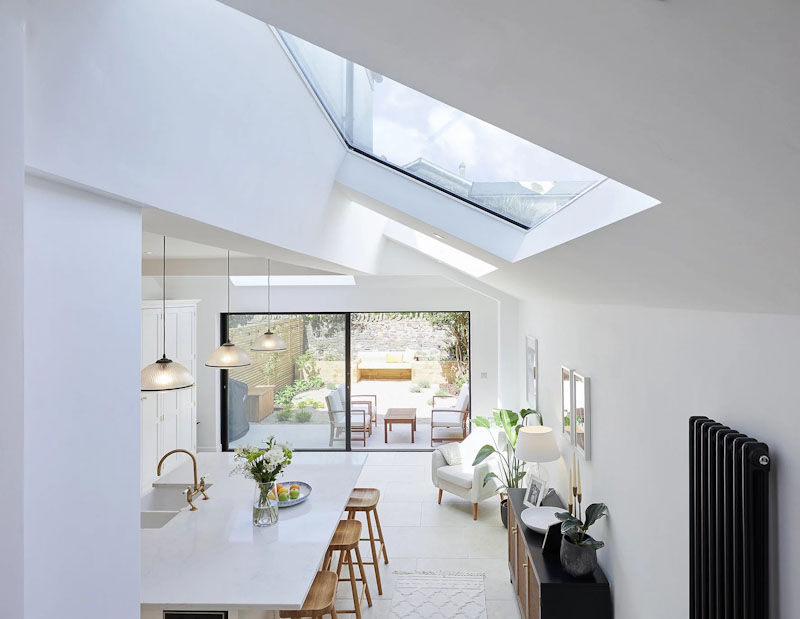
For a pitched roof, our Luxlite® Plus is built precisely for this. Its entire lid opens fully at the touch of a wall-mounted switch, so on a hot afternoon you can release a generous volume of trapped warm air in seconds – all while keeping the frameless, uninterrupted view of the sky that the Luxlite range is known for. It’s ventilation and daylight in a single unit, with nothing clipped on or compromised.
For flatter roofs, our new Hinged Opening Slimline® Roof Lantern brings the same thinking to a lantern. It opens a full 300mm to vent hot air from stuffy rooms on sunny days, while keeping the minimalist looks the Slimline is famous for – no bolted-on roof vents cluttering the design. And because a British summer rarely stays settled for long, it comes fitted with a rain sensor as standard that automatically closes the lantern if the weather turns, so you can open up on a warm morning without watching the sky all day.
Between them, they cover the two most common extension roof types – and in both cases, ventilation has been designed into the product rather than added as an afterthought.
Add controllable shade: blinds
Glazing and ventilation handle the heat itself; shading gives you control over it. There are days when you want every scrap of light, and days when the afternoon sun on a south-facing roof is simply too much – and a blind lets you dial between the two on demand. It’s the most flexible of the four measures, because it puts the decision in your hands rather than fixing it at the design stage.
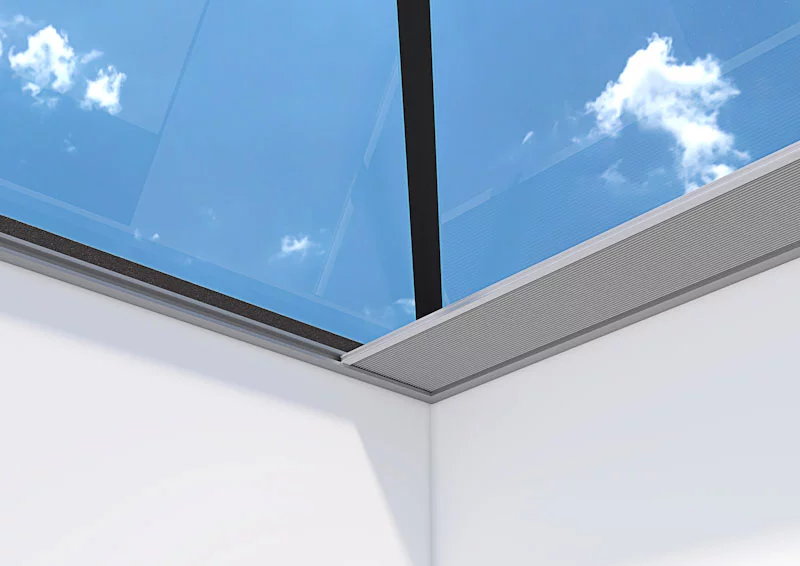
This is where Sky-Blind comes in. Fitted to the rooflight, it lets you cut out solar glare and reduce heat build-up at the press of a button, then retract completely when you want the light back. On a bright summer afternoon it takes the edge off a room that would otherwise be uncomfortable; on a dull winter day it simply stays out of the way.
The real advantage, though, is in how it’s fitted. Where possible, we can install Sky-Blind in our own factory, building it into the rooflight before it ever reaches your roof. That brings two clear benefits. First, installation is far more straightforward – there’s no separate blind to fit, wire and align on site, which saves time and removes a job that’s awkward to get right once a rooflight is in place overhead. Second, and just as important, the finish is cleaner. A factory-fitted blind sits neatly within the unit, preserving the minimalist look that makes a frameless rooflight worth having in the first place. It’s shading that feels like part of the rooflight, rather than something added to it.
For spaces where light control matters most – a bedroom, a home office, a media room – that combination of effortless operation and a tidy, integrated finish is hard to beat.
Design it in early: aspect and placement
The measures so far all work best when they’re considered at the start, not bolted on at the end – and that’s especially true of where your glazing actually goes. A few decisions made early in the design, often at little or no extra cost, can dramatically reduce how much heat a space takes on in the first place.
Aspect is the big one – that is, which way your rooflight faces. A rooflight facing south or west catches the strongest, most direct sun through the hottest part of the day, while north-facing glazing gives soft, even light with far less heat. That doesn’t mean avoiding south-facing glazing – the light it brings is wonderful – but it does mean a south-facing room benefits most from solar control glass, good ventilation and shading working together. Knowing where the sun falls lets you match the specification to the exposure.
Size and proportion matter too. More glass means more light, but also more potential heat gain, so the aim is to bring in enough daylight to transform the space without overwhelming it. And small touches in the surrounding design – a deeper reveal, a nearby tree, an overhang that shades the highest summer sun while still admitting lower winter light – can all take pressure off the room before any of the active measures come into play.
None of this requires compromise. It simply means thinking about summer comfort at the same time as winter warmth, rather than discovering the issue a season after the work is done. The earlier these choices are made, the more freedom you have to get them right – which is exactly why it’s worth raising them with your supplier at the design stage.
A quick word on Building Regulations
It’s worth knowing that overheating is now addressed directly in the Building Regulations. Approved Document O (Part O), which came into effect in England in 2022, sets out requirements to limit unwanted solar gain and provide adequate means of removing excess heat. Importantly for most homeowners, it applies to new residential buildings rather than to most extensions or renovations – so if you’re extending an existing home, you’re unlikely to be strictly bound by it.
That said, the thinking behind it is sound whatever your project. Designing to limit solar gain and ventilate well is simply good practice, and it’s the same approach we’d recommend even where the regulations don’t formally apply. If you’d like to read the detail, the official Approved Document O is freely available on the gov.uk website.
Comfortable all year round
A glazed extension should be a pleasure to sit in every month of the year – not just from October to April. Overheating has a reputation as the catch with glass roofs, but as we’ve seen, it’s really just a series of design decisions waiting to be made well. Specify glass that’s built to manage heat, give warm air a way out, add shading you can control, and think about aspect and placement early – and a glazed space stays bright and welcoming through the hottest weeks of summer without ever becoming somewhere you’d rather not be.
That’s the way we think about every rooflight we make. It’s easy to design glazing that performs beautifully in a British winter; designing it to perform just as well in a British summer takes more care, and it’s care we build in from the glass outwards. Because we manufacture our own glazing units in-house, we can match the specification to your space, your aspect and the way you’ll actually use the room – rather than handing you a unit and hoping for the best.
If you’re planning an extension, a loft conversion or any glazed space and want it to work in every season, our team is happy to talk it through. Take a look at our full range of rooflights, explore the Luxlite® Plus for pitched roofs, or give us a call on 0116 269 6297 – we’ll help you get the specification right from the start, so your summers are as comfortable as your winters.