
Adding a rooflight is one of the most impactful changes you can make to a home. Whether you're looking to flood a dark kitchen extension with light, create a stunning architectural feature in your living room, or simply bring some sky into a loft conversion, the right rooflight will transform how a space feels — and how much you enjoy spending time in it.
The good news is that there’s a rooflight for almost every situation. The not-so-obvious part is knowing which one is right for yours. This guide walks you through the full Roof Maker range so you can make an informed decision — or at least arrive at a conversation with our team knowing what questions to ask.
Start with your roof type
The single most important factor in choosing a rooflight is the type of roof you have. Most products are designed specifically for either flat roofs or pitched roofs, so this is the first fork in the road.
Flat roofs are common on single-storey extensions and modern constructions. If your roof has little or no visible pitch — or sits on top of an extension rather than the main body of the house — you’re almost certainly in flat rooflight territory.
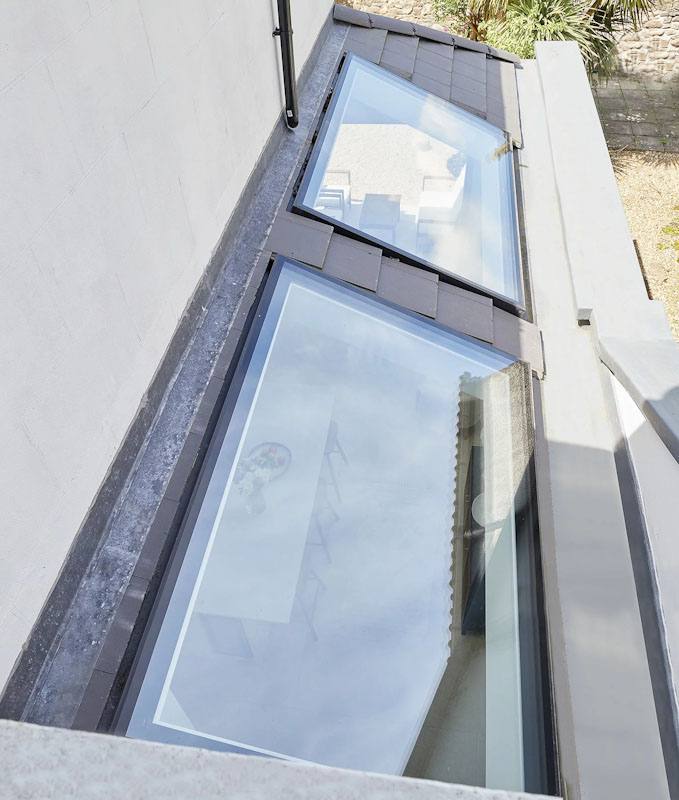
Pitched roofs are what you’d find on the main roof of most UK houses, typically covered with tiles or slates. Loft conversions are the most common application for pitched rooflights, but side return extensions with a sloping roof are another popular use case where a pitched rooflight is often the right solution.
If you’re not sure which category your project falls into, our team can help you identify the right starting point — more on that at the end.
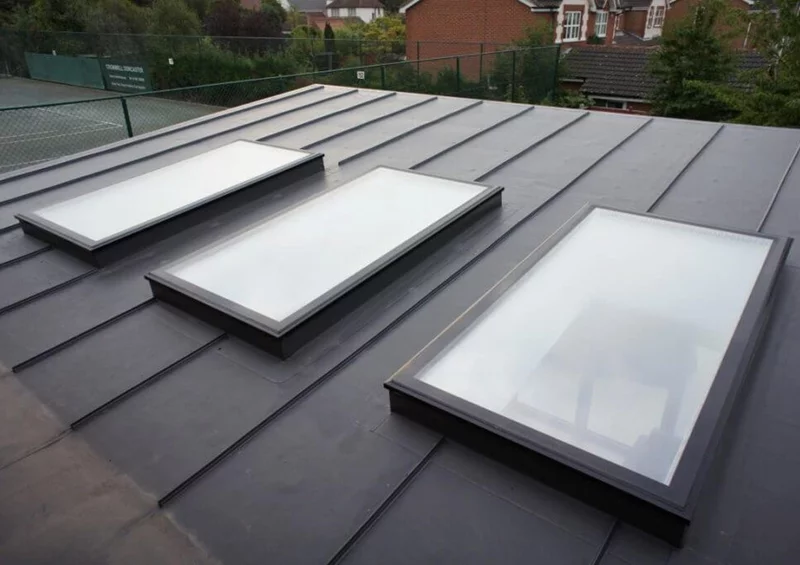
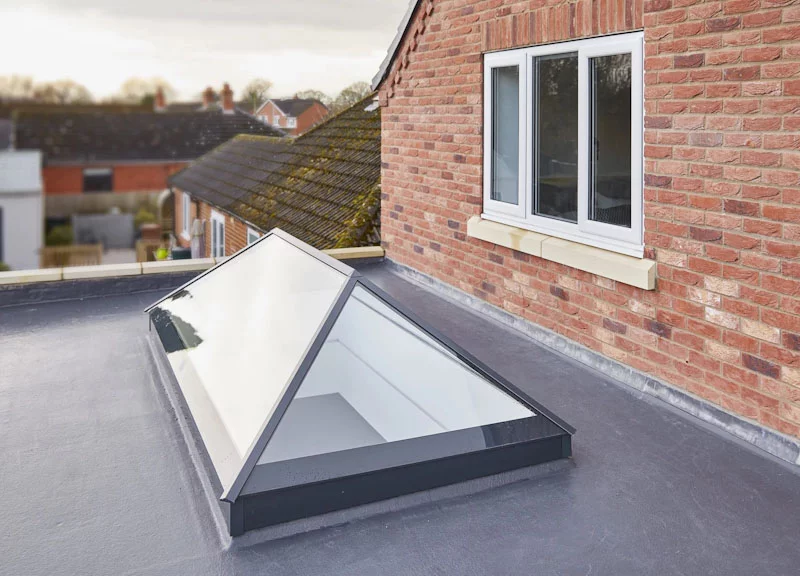
Flat roof rooflights
The flat roof range is our largest, and it covers everything from everyday residential extensions right through to specialist architectural and commercial applications.
Fixed rooflights
Fixed rooflights are the most popular choice for flat roofs, and for good reason. They maximise glazed area, require minimal maintenance, and deliver exceptional levels of natural light without any moving parts to worry about.
Fixed Flat Rooflight – Our flagship flat rooflight, available in double or triple glazing. Custom sizes up to 3 square metres as a single pane, with Ug-values as low as 0.5 W/m²K in triple glazed specification. Ideal for extensions, open-plan living areas, and anywhere you want maximum light with a clean, low-profile look.
Modular Rooflights – Where a single pane isn’t large enough, our modular system lets you combine multiple Fixed Flat units with supporting splits between them. Perfect for covering a large area of flat roof, or for creating striking configurations in unusual spaces.
O-Lite® Round Rooflight – A circular, fixed rooflight available in three diameters: 750mm, 1000mm, and 1500mm. Frameless in appearance from inside, the O-Lite® makes a beautiful centrepiece in rooms with a more organic or hexagonal layout — or simply where you want something a little different.
Wall Abutment Rooflight – Designed for installations where the roof meets a vertical wall, such as a rear extension butting up against the main house. This specialist product allows light to be brought in right up to the junction — ideal for narrow or awkward spaces that would otherwise stay dark. See the Wall Abutment Rooflight for full details.
Walk-on Rooflight – A structural glass floor that can be walked on, available for both internal and external applications. If you have a basement or lower ground floor that needs light from above, or a roof terrace where the surface below needs to be illuminated, walk-on rooflights are the solution.
Fire Rated Rooflight – Designed for installations close to a boundary or in situations where Building Regulations require fire resistance. Our fire rated rooflight meets the relevant fire performance standards without compromising on light transmission.
Passive House Rooflight – For projects built to Passive House standard or targeting ultra-low energy performance, our Passive House rooflight achieves the exceptional thermal values required for certification. If you’re building to the highest energy efficiency standards, this is the product you need.
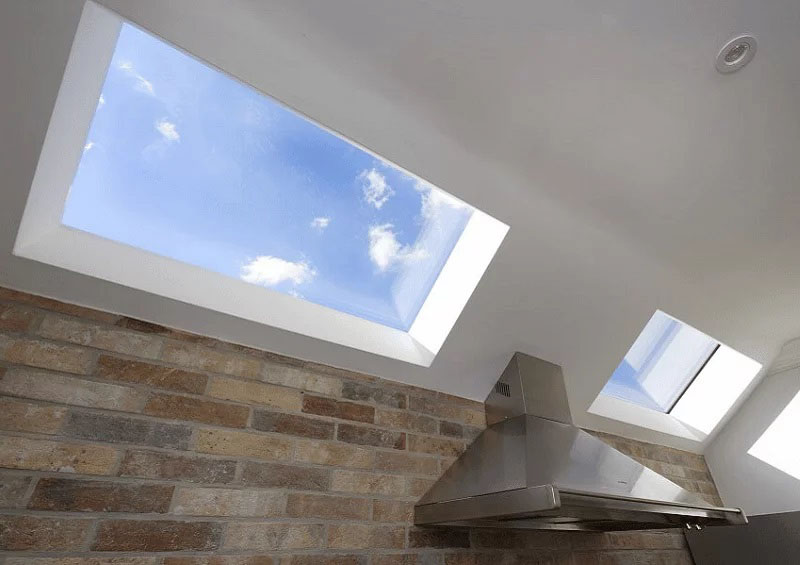
Opening rooflights
Where ventilation matters alongside light – think kitchens, bathrooms, or any space that can get warm and stuffy – an opening rooflight is the smarter choice.
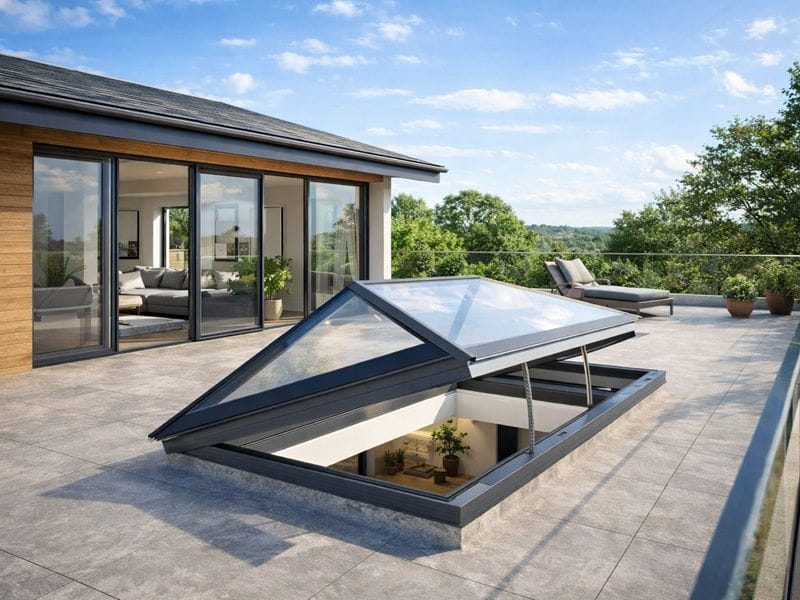
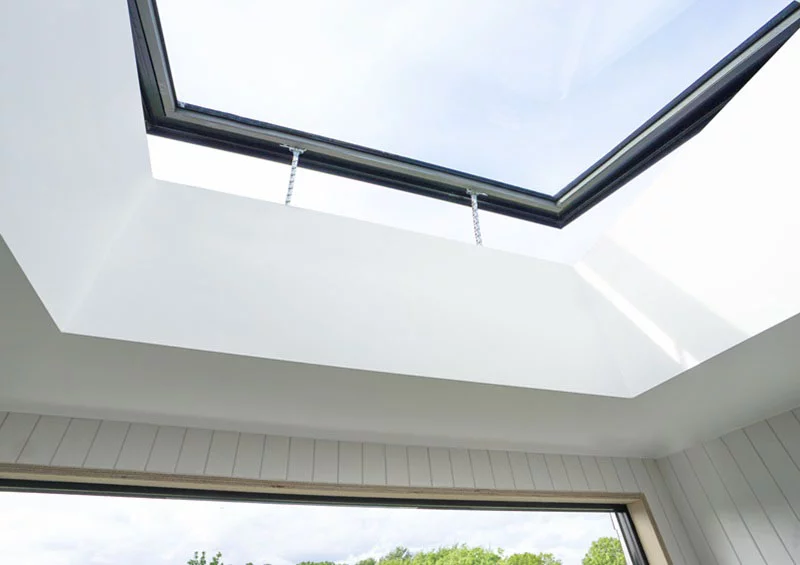
Hinged Opening Flat Rooflight – Available in double or triple glazed specification, this rooflight opens via a concealed chain actuator, controlled by a wall-mounted switch or remote. It can be opened partially or fully up to 400mm, and features a rain sensor that closes it automatically if the weather turns.
Open-Lite® Electric Access Rooflight – Not just a rooflight, but a fully functioning roof access point. The Open-Lite® opens completely clear of the frame, providing a large, unobstructed opening for roof terrace access, maintenance access, or ventilation. If you want roof access without the bulk of a traditional hatch, this is a genuinely elegant solution.
Roof lanterns
If you’re looking for something more architectural — a centrepiece rather than just a source of light — a roof lantern is worth serious consideration. Unlike flat rooflights, lanterns are three-dimensional, rising above the roof surface to channel light in from multiple angles and add real height and drama to a room.
Slimline® Roof Lantern – Our most popular lantern, featuring the slimmest glazing bars on the market. The profiles are blended into the glass unit seals for an exceptionally clean, minimal look that maximises light. Available in bespoke sizes and a wide range of RAL colours.
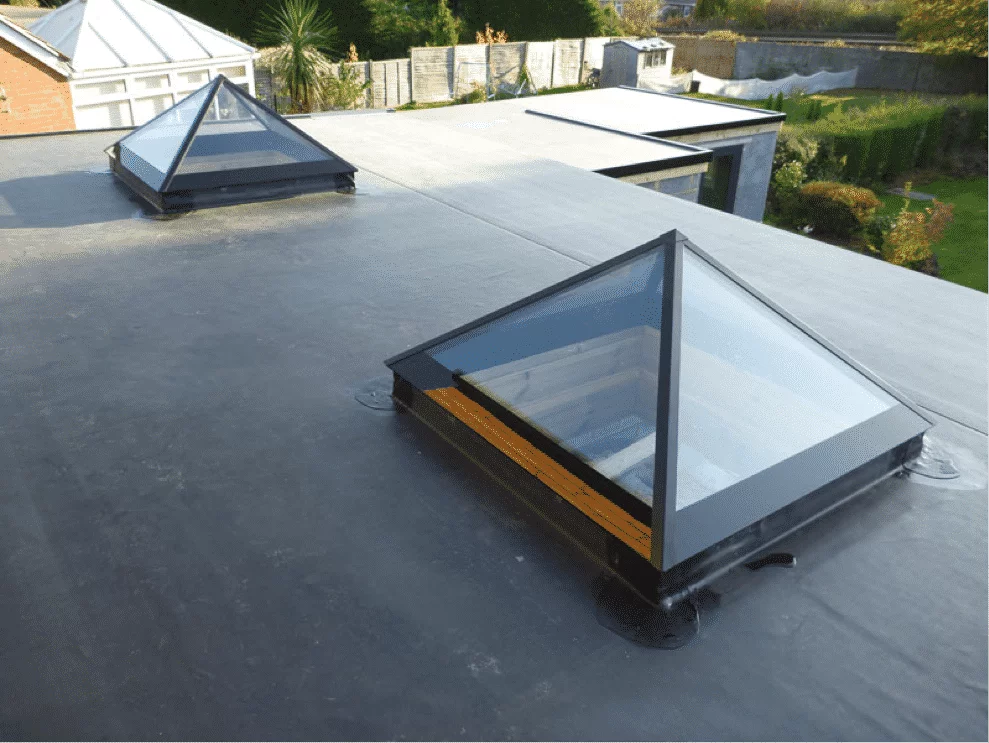
Pyramid Roof Lantern – A four-sided symmetrical design that works beautifully as a centrepiece over a square or near-square space. The Pyramid Roof Lantern creates a striking geometric feature and works equally well in contemporary and traditional settings.
Hinged Opening Slimline® Roof Lantern – All the architectural impact of the Slimline, with simple electric operated ventilation. A great choice where you want a lantern but need the option to let fresh air in.
Pitched roof rooflights
If your project involves a tiled or slate pitched roof — most commonly a loft conversion or a side return extension with a sloping roof — then you need a pitched rooflight rather than a flat one. Our Luxlite® range is designed specifically for this application.
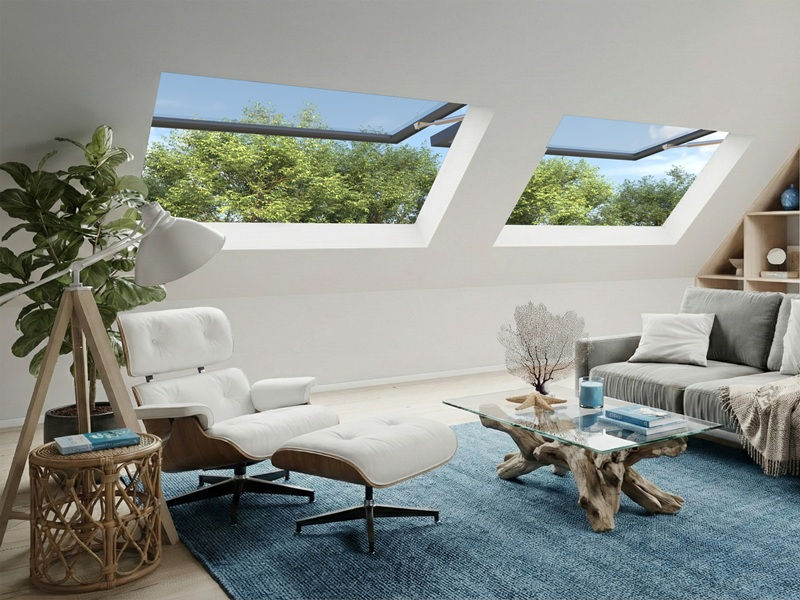
Luxlite® Pitched Rooflight – Available in double or triple glazed specification, the Luxlite® is designed to sit flush within the roofline and appears completely frameless from the inside. This frameless internal view is what sets it apart from conventional roof windows — more glass, less frame, more light.
Conservation Luxlite® – Designed for properties in conservation areas or where the local planning authority requires a more traditional rooflight aesthetic. Available in double or triple glazed versions, it retains the same quality of construction as the standard Luxlite® but with a profile that meets conservation area requirements.
Fixed or opening – which do you need?
Once you’ve identified the right product family, the next question is whether you need ventilation. Fixed rooflights are generally more thermally efficient (no moving parts, tighter seals) and cost less than their opening equivalents, so if ventilation isn’t a priority, fixed is usually the better choice.
Opening rooflights come into their own in kitchens, bathrooms, utility rooms, and other spaces where steam, cooking smells, or simply warm air needs to escape. Our hinged opening flat rooflights and the Hinged Opening Slimline Lantern all include a rain sensor as standard, so you don’t need to worry about closing them if you’re out.
Glazing – what to look for
The glazing specification has a significant impact on how well a rooflight performs thermally, and how much maintenance it requires over time. For a more detailed look at our innovative glazing technology, head to our dedicated page. In the meantime, here’s a quick breakdown of the key considerations:
- Double vs triple glazing: Triple glazing offers better thermal performance and noise reduction. For most UK homes, triple glazing is the better long-term investment — our triple glazed products achieve Ug-values as low as 0.5 W/m²K, well in excess of Building Regulations minimums.
- Low-emissivity coatings: These invisible coatings on the glass reduce the amount of heat that escapes through the pane, improving overall thermal efficiency without affecting light transmission.
- Argon gas fills: The cavity between panes in a sealed unit is filled with argon gas rather than air, which significantly reduces heat loss.
- Easy clean glass: A specialised coating that uses UV light to break down organic dirt, and allows rainwater to rinse the glass clean rather than forming droplets. It doesn’t eliminate the need for occasional cleaning, but it significantly reduces how often it’s needed — particularly valuable for hard-to-reach roof installations. Some suppliers claim their glass is ‘self-cleaning’; as we explain in our guide to the self-cleaning glass myth, that’s not quite an accurate description of how the technology works.
- Solar control glazing: For south-facing installations, solar control glass reduces heat build-up during summer months while maintaining good light transmission.
Frames, finishes, and thermal performance
All Roof Maker rooflights use aluminium frames — not uPVC. Aluminium is stronger, slimmer, and far more durable over the long term. It also accepts powder coating in virtually any RAL colour, so you can match frames to your interior or exterior scheme precisely. We use marine-grade powder coating for maximum resistance to the elements.
Crucially, our frames feature thermally broken construction — meaning the frame is engineered to eliminate cold bridging. This prevents condensation forming at the frame edges and improves the overall thermal performance of the installation. It’s a non-negotiable feature for any quality rooflight, and worth asking about if you’re comparing products from different manufacturers.
For a deeper dive into why frame material matters, take a look at our aluminium vs uPVC guide.
Size and configuration
Getting the size right is just as important as choosing the right product. A few things to keep in mind:
- Measure internal dimensions (timber to timber) rather than surface measurements. Some manufacturers quote external frame sizes to make their offer look more competitive — at Roof Maker, we quote on internal dimensions so you know exactly what you’re getting in terms of glazed area. We cover this in more detail in our guide to internal vs external measurements.
For roof lanterns, a good rule of thumb is that the lantern should represent around 10–20% of the room’s floor area for the best visual balance. Our team can advise on sizing for your specific space.
- For large openings on flat roofs, a modular system of multiple fixed flat rooflights often provides a better structural solution than a single very large unit — and opens up more interesting design possibilities.
- Custom sizing is available across most of the range, so you’re not limited to standard dimensions.
Our flat roof light measuring guide and roof lantern measuring guide walk through the measuring process in detail if you want to get your numbers together before getting in touch.
Not sure where to start? We can help.
If you’re still weighing up your options, you’re not alone — most of our customers come to us with a space in mind rather than a product already chosen. That’s exactly what our team is here for.
You can reach us by phone on 0116 269 6297, or drop us an email via the contact page. We’ll ask you a few straightforward questions about your roof, your room, and what you’re hoping to achieve — and point you in the right direction.
If you’d prefer to see the products in person before committing, we’d love to welcome you to our Leicester showroom. It’s the best way to get a real sense of the quality and scale of the range, and our team will be on hand to talk through your project in as much detail as you need.