
Choosing a pitched rooflight comes down to a handful of decisions, and there’s a sensible order to take them in. Get the order right and the choice becomes easier, and much less likely to be regretted once the scaffolding comes down.
This guide walks through them for a loft conversion or a pitched extension, starting with the roof itself.
Start with the roof: pitch and aperture
Two measurements settle most of what follows, and both come from the roof rather than the rooflight.
Start with pitch, the angle of the roof slope. The Luxlite range works across pitches from 16 to 75 degrees, and that applies to every product in it, including the Conservation Luxlite and the Luxlite Plus. Your architect’s drawings will usually state the pitch. If they don’t, a digital angle finder held against a rafter gives you the answer in seconds, and your builder will almost certainly have one. It’s the first thing any supplier will ask, so have the number ready before you start talking.
Then there’s the aperture, the opening cut into the roof for the rooflight to sit in. In a pitched roof, the rafters largely decide it. Measure the structural opening, timber to timber, rather than the outside of any frame. When you compare quotes, check whether the size given is the internal size or the external frame size. We quote on internal dimensions, so you can see exactly what you’re getting in glazed area.
If a rooflight is wider than the gap between two rafters, the rafters will need trimming and supporting around it. That’s a decision for your builder or a structural engineer, and it’s best made early, before the rooflight size is fixed.
Every rooflight in the Luxlite range is made to order, so the rooflight is sized to your opening rather than the other way round. Standard sizes can be specified too, if you’d prefer to start from those
Fixed or opening?
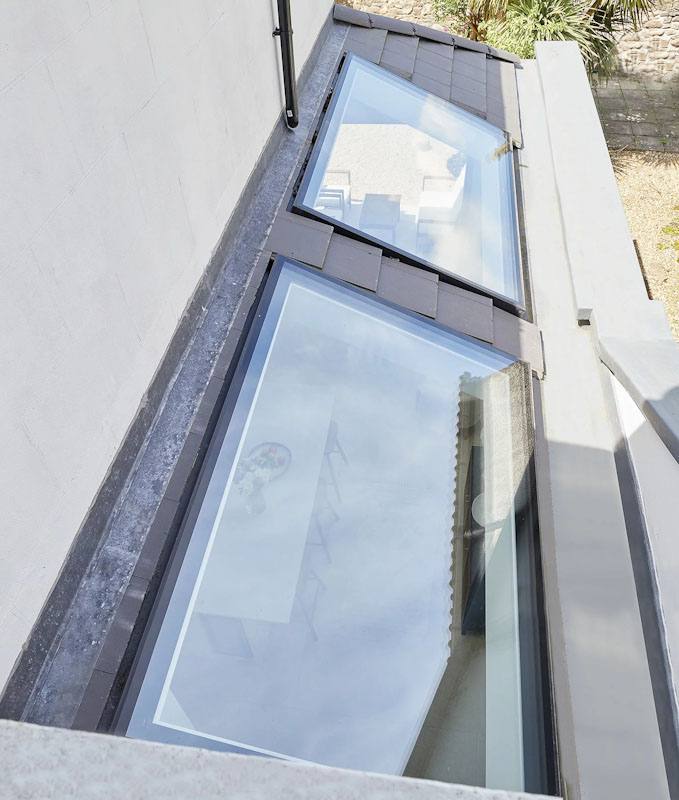
A fixed rooflight is sealed, with no moving parts. That makes it the most thermally efficient option, it gives you the most glass for a given opening, and it needs the least maintenance. It also costs less than an opening equivalent. Where a room already has good ventilation from elsewhere, a fixed rooflight is often all it needs, and it’s the simplest choice.
Loft rooms make the strongest case for an opening rooflight. They sit directly under the roof, which takes the brunt of the summer sun, so they’re the rooms most likely to build up heat. Warm air rises and collects at the highest point, and a rooflight that opens lets it out exactly where it gathers, drawing cooler air in from lower down. Our guide to stopping a glazed extension overheating in summer covers the physics in more detail. A loft bedroom also benefits from being able to bring in fresh air overnight.
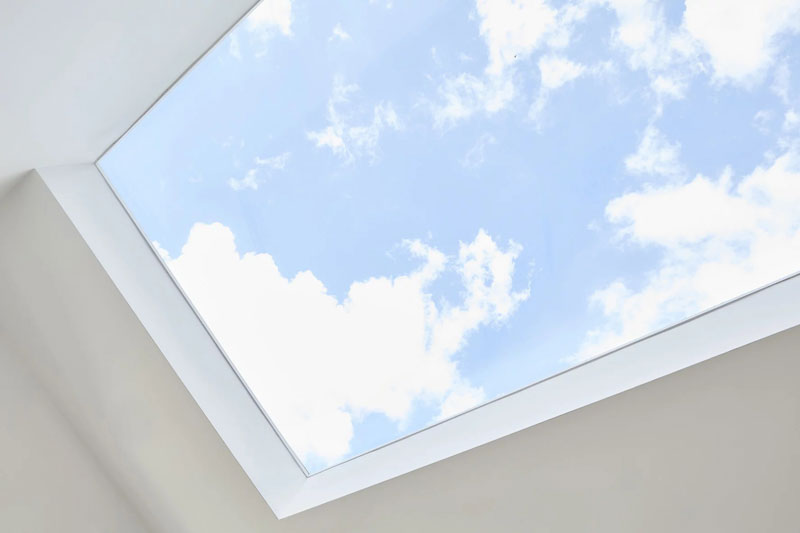
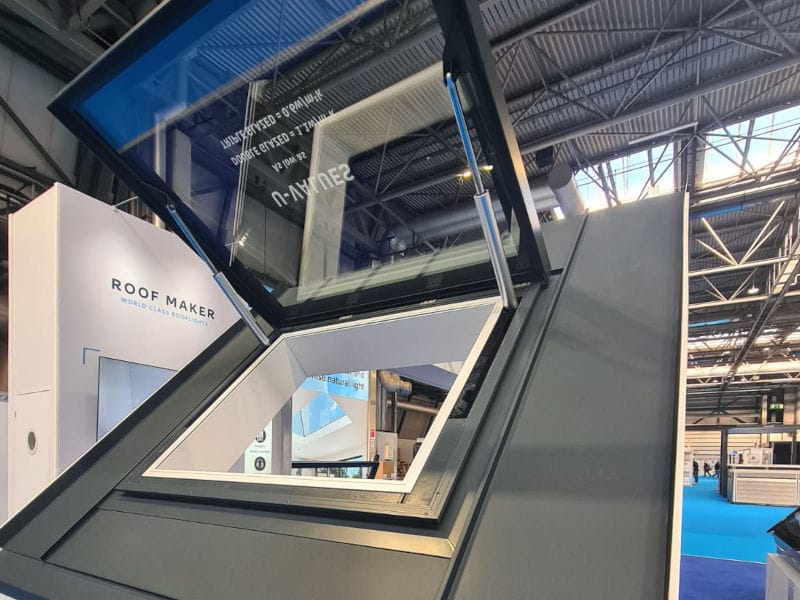
The Luxlite is available in fixed and opening versions, and the Luxlite® Plus takes opening furthest. The entire lid lifts to 88 degrees at the press of a wall-mounted switch, so there’s no pane tilted across the opening and nothing between you and the sky. You get generous ventilation, access to the roof space and an uninterrupted view out, and because the frame is hidden from inside, the view is just as clear when the lid is closed.
The practical question is whether the rooflight will be the room’s main way of shedding heat and stale air. If it will, choose an opening version. If you’d also like the room to feel open to the sky rather than just well ventilated, the Luxlite Plus is the one to look at. Where the room has plenty of ventilation elsewhere, fixed keeps things simple and gives you the most glass.
Choosing the glazing
The glass decides how a room behaves through the year: how warm it stays in winter, how hot it gets in summer, and how much of the outside world it lets in. Three choices matter, and most rooms only need one or two of them.
The first is double or triple glazing. Both are available across the whole Luxlite range, including the Luxlite® Plus, with argon-filled cavities either way. Modern double glazing already performs well. Triple glazing takes it further, with a third pane and a second sealed cavity for lower heat loss and a quieter room. In its triple-glazed form, the Luxlite Plus achieves Ug-values as low as 0.6 W/m²K.
The difference is felt most in rooms used all year round, like a bedroom or a study, where a warmer inner pane and lower heat loss show up every winter. A room used occasionally, or one that already stays comfortable, may not need the extra pane.
The second is solar control glass, and it depends on where the roof faces. A slope that catches the strongest afternoon sun, typically south or west facing, can turn a loft room into the hottest space in the house. Solar control glass lets the daylight in while reflecting away a large share of the sun’s heat. It’s an upgrade rather than a standard feature, so it needs to be specified. Paired with an opening rooflight and a blind, it gives you three ways to keep a loft room comfortable in summer, which our guide to stopping a glazed extension overheating in summer covers in more depth. A north-facing slope rarely needs it.
The third is laminate. Laminated glass has a plastic interlayer between two thinner panes, and a laminated inner pane is the spec change that does the most for noise. We offer laminate as an upgrade across the range, with toughened laminate as the higher-performance option. It’s worth considering for a bedroom under a flight path, on a busy road, or for a light sleeper. Our piece on rooflights and noise explains why. If none of those apply, standard glazing will do the job.
Size, number and position
The roof sets the largest opening you can have. The room decides how much of it to use. More glass brings more light and, on a sun-exposed slope, more heat, so the aim is enough daylight to change the room without overwhelming it. A generous rooflight on a north-facing slope and the same rooflight facing south are very different propositions, and the glazing choices above are what let you go bigger with confidence.
One large rooflight or several smaller ones is a design decision as much as a practical one. A single large unit gives a clean roof and a strong focal point. Several smaller ones spread daylight along a long room, and they can be easier to fit between the rafters than one wide opening that needs more structural work. Your architect or builder can advise on the rafter layout, and because every Luxlite is made to order, you’re not tied to a fixed set of sizes either way.
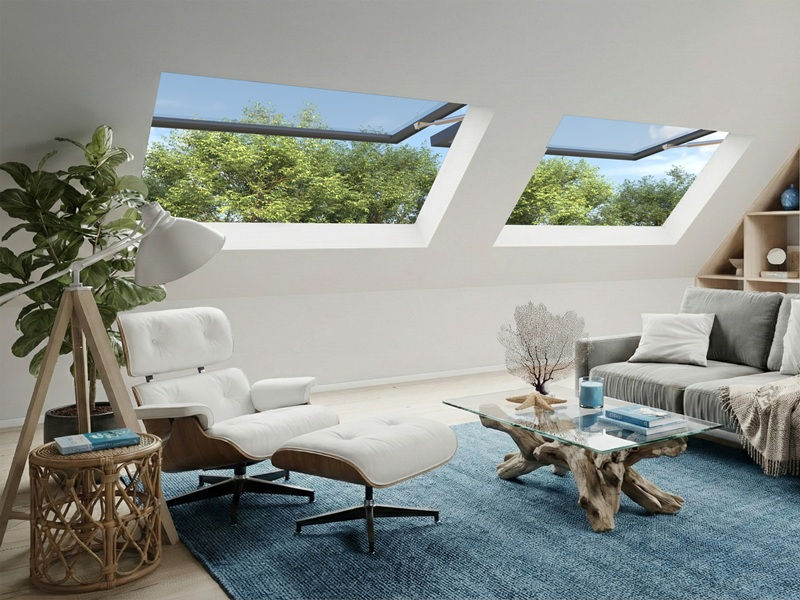
Position matters as much as size, and it’s worth thinking about how the room will actually be used. Over a bed, a rooflight becomes a view of the sky at bedtime and first thing in the morning. Over a desk or a reading chair, it puts the light where you sit. On a landing or stairwell, it can bring daylight into the middle of a house that would otherwise rely on borrowed light. The Luxlite® Plus makes position matter a little more, since the whole lid opens and the frame is hidden from inside. Put it where you’d like to look up.
A simple way to test all this is to mark the possible positions on your ceiling plan before the sizes are fixed. It’s a quick exercise, and it can change the answer.
Blinds for loft rooms
A blind lets one rooflight do two jobs. A loft bedroom needs to go dark when it’s time to sleep, and a study under a sunny slope may need the afternoon glare and heat toned down. Both are easier with a blind than with a change of glass.
Sky-Blind® is made to measure for the rooflight. The fabric is pleated, either translucent to soften the light or blackout to block it completely, in four neutral colours as well as black and white. The aluminium inner foil helps reduce solar gain and heat loss. You can operate it manually or on mains power. A solar-powered version needs no wiring and no electrician, and its battery typically lasts two to three months between charges, depending on use. The electric versions use a programmable remote, so the blind can be drawn fully or just part of the way across.
For a new rooflight, the simplest route is to add the blind when you order. We can fit it in our factory, so it arrives as part of the rooflight, with no separate blind to measure and fit on site. Blinds can also be made for an existing Roof Maker rooflight if you’d rather add one later. A blind can be specified with the Luxlite Plus too, so the same rooflight can give you an open view of the sky when you want it and a dark room when you don’t.
Decide in the right order
Pitch and aperture come first, because they set what’s possible. Next, decide whether the rooflight needs to open. Then choose the glazing, based on how the room will be used and which way the roof faces. Finally, settle the size and position, and add a blind if the room needs darkness or a break from the sun. Taken in that order, each answer narrows the next question, and the specification usually becomes clear.
If you’d like a second opinion on any of it, our team is happy to talk it through. Call us on 0116 269 6297, or take a look at our pitched rooflights. For the wider picture of how far the category has moved on, see The Pitched Rooflight, Reconsidered.